Black Coral Snake Plant
Introduction
Gorgeous Snake Plant With Cool Variegation and Color
- Upright plant perfect for tight spaces
- Nice clean lines for a modern home
- Adds height
- Purifies the air!
Description
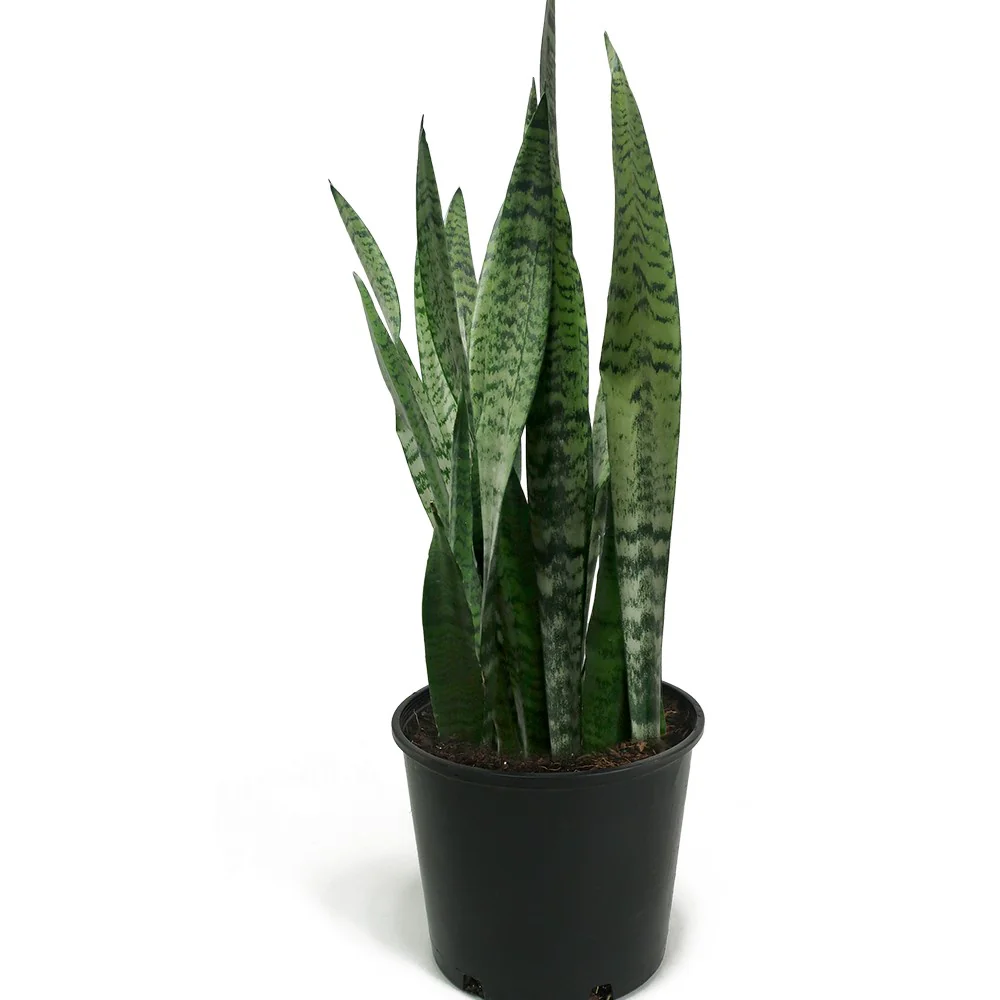
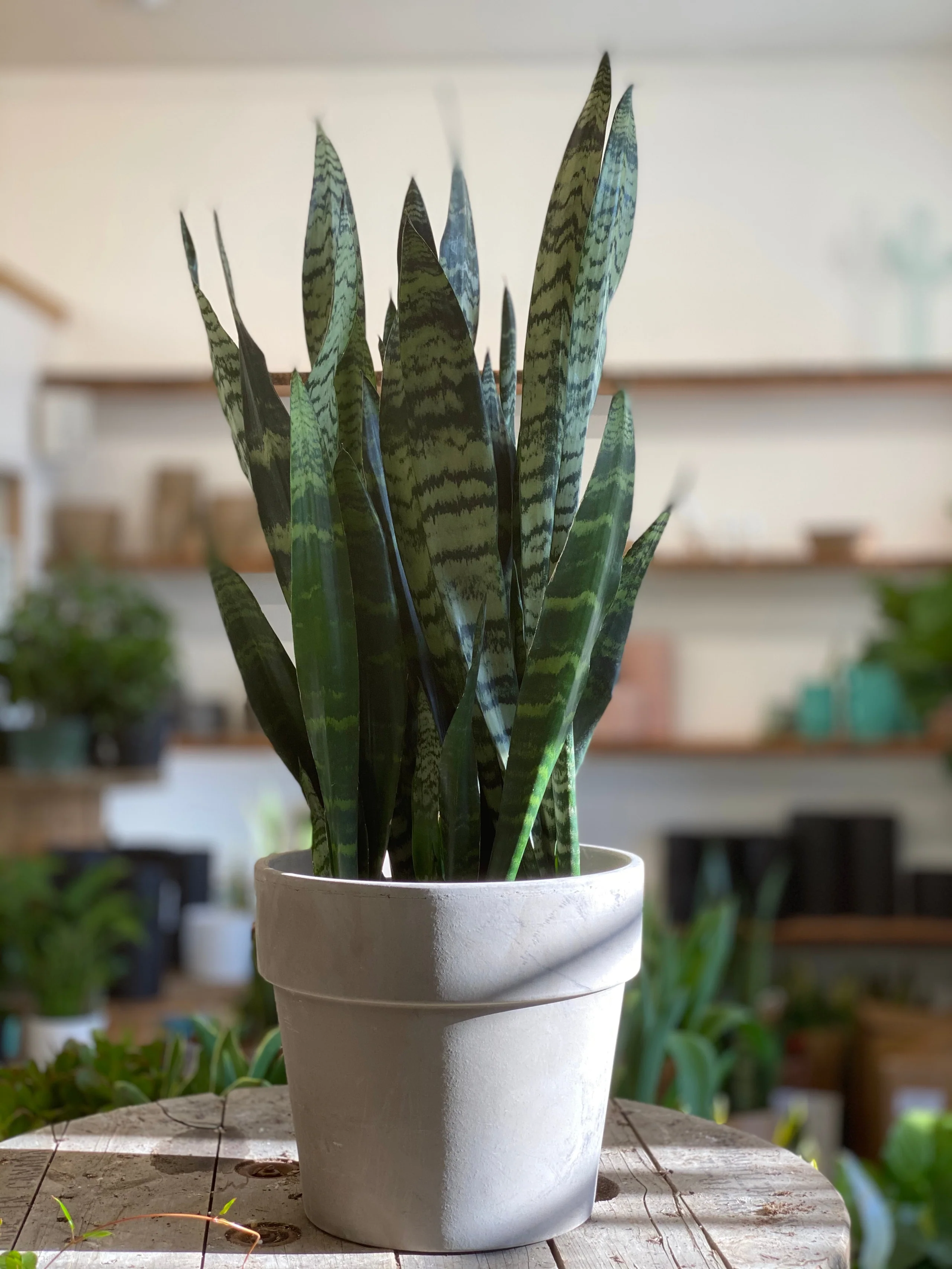
The Black Coral Snake plant is absolutely gorgeous. It has all the amazing features of the traditional sansevieria, but with a different variegation pattern. The pattern spreads to the edges of the leaves instead of having a yellow margin like the variegated snake plant. We recommend mixing and matching these 2 snake plant varieties in a set of three, either placed together or staggered around your room.
Snake plants are low maintenance houseplants. They tolerate drought and only need to be watered when the soil is dry. The black coral snake plant is easy to grow and stunning! It also filters toxins out of the air. What more could you ask for in a houseplant?
Key Features
- Texture and color. The black coral snake plant adds nice texture and color to your indoor living space. It also has strong lines and exciting variegation.
- Upright plant for tight spaces. Add height to the most narrow spots in your home.
- Easy to grow. Snake plants are super easy to grow. They are perfect houseplants for novice gardeners.
- Snake plants top NASA’s Clean Air Study list. The black coral sansevieria will clean your air while looking beautiful.
The Black Coral Snake plant is exciting and unique. Buy one today and transform your living space with our large houseplants.
How to Care
Give snake plants a bright location for the best results. They do adjust to lower light conditions.
Plant the black coral snake plant in a pot with several drainage holes and a good organic planting mix. These houseplants are adaptable but prefer well-drained soil.
Snake plants should be fertilized 2 or 3 times per year with a high quality balanced slow-release fertilizer.
Check the soil of your potted plant about once per week. Put your finger down in the soil about 2 inches. If the soil is dry go ahead and water thoroughly. If the medium feels moist hold off for a few more days.
Prune off dead or dying leaves with scissors or pruning shears.
If needed, spring is the best time to divide and repot sansevieria.
Check out our large houseplants for sale!
Original: $34.95
-70%$34.95
$10.49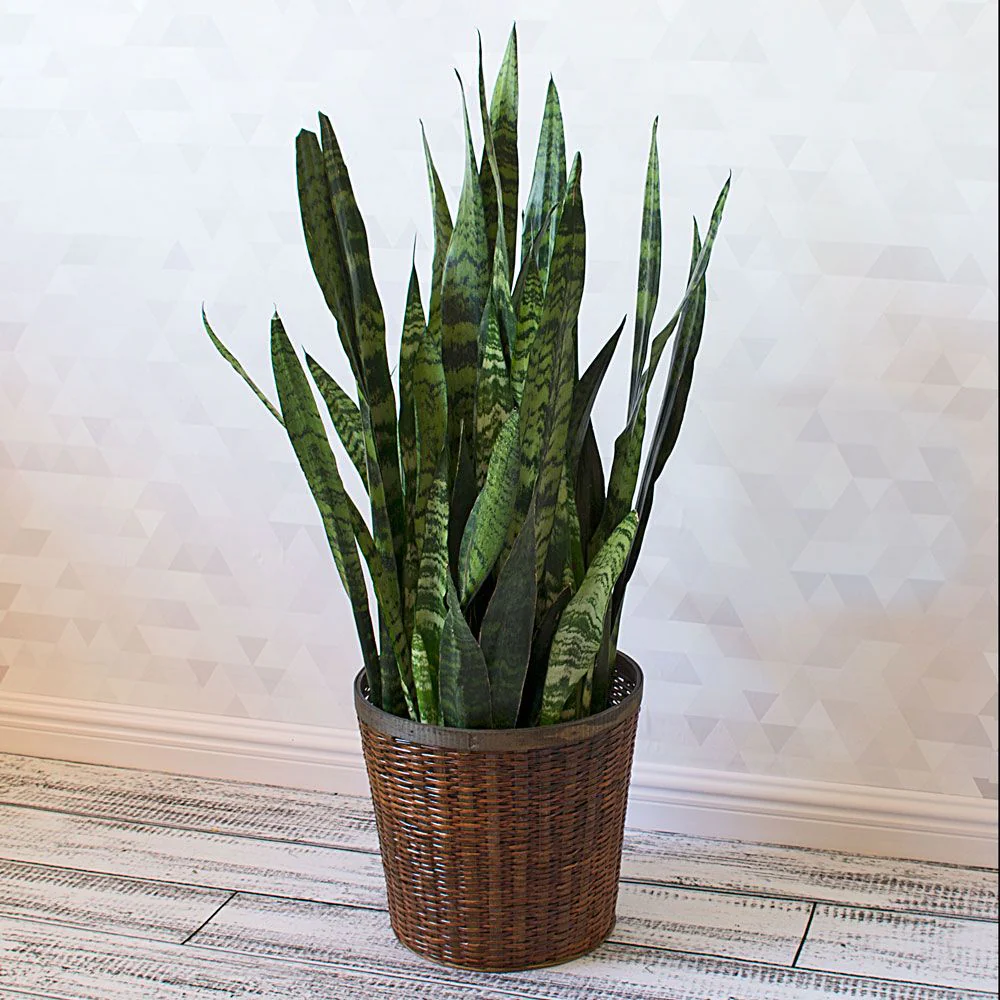
Description
Introduction
Gorgeous Snake Plant With Cool Variegation and Color
- Upright plant perfect for tight spaces
- Nice clean lines for a modern home
- Adds height
- Purifies the air!
Description
The Black Coral Snake plant is absolutely gorgeous. It has all the amazing features of the traditional sansevieria, but with a different variegation pattern. The pattern spreads to the edges of the leaves instead of having a yellow margin like the variegated snake plant. We recommend mixing and matching these 2 snake plant varieties in a set of three, either placed together or staggered around your room.
Snake plants are low maintenance houseplants. They tolerate drought and only need to be watered when the soil is dry. The black coral snake plant is easy to grow and stunning! It also filters toxins out of the air. What more could you ask for in a houseplant?
Key Features
- Texture and color. The black coral snake plant adds nice texture and color to your indoor living space. It also has strong lines and exciting variegation.
- Upright plant for tight spaces. Add height to the most narrow spots in your home.
- Easy to grow. Snake plants are super easy to grow. They are perfect houseplants for novice gardeners.
- Snake plants top NASA’s Clean Air Study list. The black coral sansevieria will clean your air while looking beautiful.
The Black Coral Snake plant is exciting and unique. Buy one today and transform your living space with our large houseplants.
How to Care
Give snake plants a bright location for the best results. They do adjust to lower light conditions.
Plant the black coral snake plant in a pot with several drainage holes and a good organic planting mix. These houseplants are adaptable but prefer well-drained soil.
Snake plants should be fertilized 2 or 3 times per year with a high quality balanced slow-release fertilizer.
Check the soil of your potted plant about once per week. Put your finger down in the soil about 2 inches. If the soil is dry go ahead and water thoroughly. If the medium feels moist hold off for a few more days.
Prune off dead or dying leaves with scissors or pruning shears.
If needed, spring is the best time to divide and repot sansevieria.
Check out our large houseplants for sale!